HOA Fees in Luxury Communities: What Buyers Should Know
Morrell Property Collective August 12, 2026
Buyers

Morrell Property Collective August 12, 2026
Buyers
If you're shopping in Nashville's higher-end neighborhoods, you've probably noticed that HOA fees swing widely from one listing to the next. A stately home in an established, non-gated neighborhood might carry no HOA at all, while a house two miles away in a gated golf community could carry dues running into several hundred dollars a month or more. Neither number tells you much on its own — what matters is what's behind it.
That gap catches a lot of buyers off guard, especially those moving from markets where HOA fees are smaller or less common. In Nashville's luxury segment, dues are often doing real work: staffing a gate, maintaining a golf course, insuring a clubhouse, or funding a reserve account for a private road system. The fee isn't the story. What it's funding is.
This post breaks down what luxury HOA fees typically pay for, why they run higher than a standard subdivision's dues, the assessment risk buyers often miss, and how to evaluate whether a given fee is fair for what you're getting.
In a standard subdivision, HOA dues often cover little more than common-area landscaping and maybe a shared entrance sign. In a luxury community, the scope is usually much larger. Depending on the neighborhood, monthly or annual dues can go toward:
Some luxury developments also separate a mandatory HOA fee from an optional country club or social membership, so it's worth asking whether a listed dues amount already includes club access or whether that's billed separately.
The math is straightforward: more infrastructure and more staff cost more to maintain. A community with a manned gate, a golf course, and private roads has ongoing labor and maintenance costs that a typical subdivision simply doesn't carry. Insurance premiums for shared amenities like clubhouses and pools have also risen in recent years, which associations pass through to homeowners.
Fee amounts vary enormously by community type — a neighborhood with a gate and shared landscaping will land well below one with a golf course, full clubhouse, and private road system. What matters more than the raw number is what's included and how the association manages its budget.
The monthly fee is only part of the picture. If an association's reserve fund is underfunded, a major expense — a new roof on the clubhouse, road resurfacing, a pool renovation — can trigger a special assessment: a one-time charge on top of regular dues, sometimes running into the thousands of dollars per homeowner.
Before writing an offer in any HOA-governed community, it's worth requesting:
This is standard due diligence, and most listing agents can get these documents from the seller or management company without much delay.
A fee is reasonable when it's proportional to what it delivers and the association is financially sound. A fee is a concern when it's high relative to the amenities offered, the reserve fund is thin, or the community has a recent history of assessments. Comparing the fee against similar communities nearby — and reading the association's financials rather than just the monthly number — is the most reliable way to tell the difference.
There's no single "normal" figure — luxury HOA fees vary based on what amenities and services are included, from a few hundred dollars a month for landscaping and a gate to considerably more in communities with golf courses, clubhouses, or full-service staff. The right comparison is against similar communities with similar amenities, not a national average.
Not on their own. A high fee paired with well-maintained amenities, healthy reserves, and no recent special assessments is often a sign of a well-run association. It becomes a concern when the fee is high but the reserves are low, maintenance is visibly deferred, or the community has a pattern of surprise assessments — that combination is worth investigating before you buy.
Can HOA fees increase after I buy? Yes. Most HOA governing documents allow annual increases, typically capped by a percentage or requiring a homeowner vote above a certain threshold. It's worth reviewing the association's bylaws for the specific cap.
Are HOA fees tax deductible? Generally no, for a primary residence. They may be partially deductible if the home is a rental or used for business purposes — a tax professional can confirm how that applies to your situation.
What's considered a luxury home in the Nashville area? Definitions vary by neighborhood, but luxury listings in Nashville are typically distinguished by premium finishes, larger lots or acreage, and location in sought-after areas like Belle Meade, Forest Hills, Franklin, or Brentwood, often alongside amenity-rich gated communities.
How long do luxury homes typically stay on the market here? Days-on-market for luxury listings varies by season, price point, and neighborhood. An agent with recent luxury sales in the specific neighborhood can give you a more precise, current read than any general figure.
Why work with a specialist for a luxury HOA purchase? Luxury communities each have their own governing documents, fee structures, and amenity arrangements. An agent who regularly works in these communities can help you compare fees accurately and know which financial documents to request before you're under contract.
An HOA fee in a luxury community is rarely just overhead — it's usually funding the gates, greens, and shared spaces that make the neighborhood what it is. The number on the listing sheet matters less than what it buys and how well the association manages its finances behind it.
If you're weighing a purchase in one of Nashville's gated or amenity-rich communities and want a clear read on what a specific HOA's fees actually cover, Morrell Property Collective can help you pull the right documents and compare it against similar neighborhoods before you make an offer. Reach out anytime at (615) 593-3103.

Featured Listing
A furnished, proven Airbnb cabin with mountain views, priced at $525,000
Featured Listing
Why Old Hickory Lake's south shore is drawing buyers who want lake life without leaving Nashville behind

Neighborhood
Why Old Hickory Lake's south shore is drawing buyers who want lake life without leaving Nashville behind

Featured Listing
Inside The Modernest WeHo's current lineup, from a $309,900 studio to a $1.3 million three-bedroom

Buyers
A step-by-step look at the weeks between a signed Tennessee contract and closing day
Featured Listing
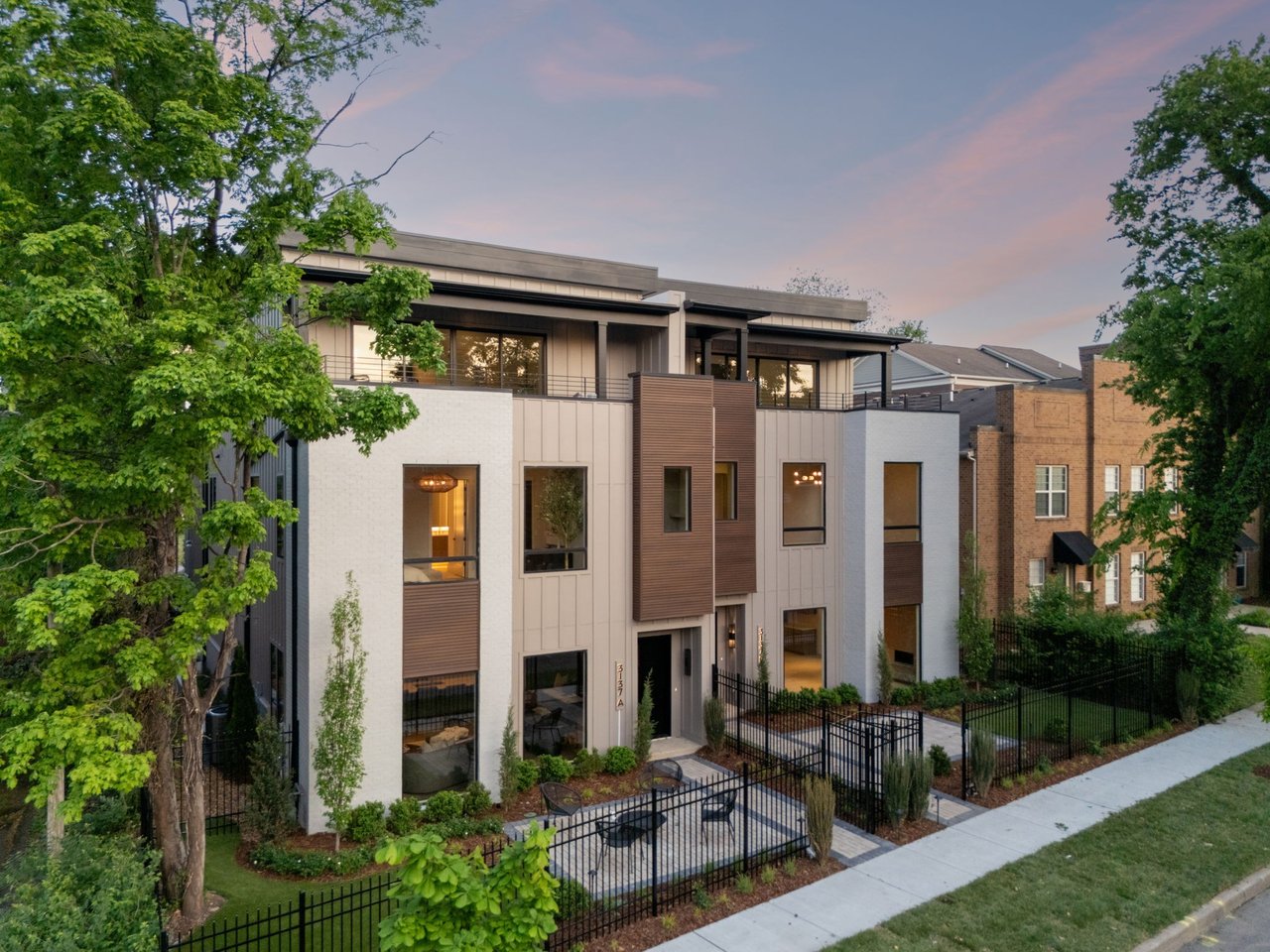
Two mirror-image luxury homes steps from Vanderbilt, Centennial Park, and West End's best dining

MPC Expertise
The licensed brokers, operations, and marketing team behind every transaction

Neighborhood
Where home values concentrate across Music City, from Green Hills to Berry Hill

Real Estate Market
What the September rate increase and today's mortgage rates mean for luxury buyers
The client deserves the full service and attention that only a team of experts can consistently provide. Working with us, you will have the personal attention traditionally associated with the client-agent relationship improved by the professionalism and consistency of a thoughtful business model. And yes, superior results will follow!
MORRELL PROPERTY COLLECTIVE
(615) 593-3103
[email protected]
ADDRESS
3990 Hillsboro Pike, #320
Nashville, TN 37215