Luxury Real Estate Myths Debunked for Nashville Buyers
Morrell Property Collective August 13, 2026
Real Estate Market

Morrell Property Collective August 13, 2026
Real Estate Market
Luxury real estate attracts more assumptions than almost any other corner of the market — that it's cash-only, that it always sells fast, that prices only go up. Some of these ideas have a grain of truth buried in them. Most don't hold up once you look at how the segment actually works.
That gap matters, whether you're a buyer trying to plan financing or a seller deciding how to price and present a home in Nashville's upper tiers. Acting on a myth can mean overpaying, underpricing, or skipping a step — like staging — that genuinely affects the outcome.
Here are five of the most common luxury real estate myths, and what the facts actually show.
Key takeaways:
It seems intuitive — a better home should move faster. In practice, the opposite is usually true. A $2 million-plus home has a fundamentally smaller pool of qualified buyers than a $400,000 home, and fewer buyers looking at any given time typically means fewer offers and a longer marketing period, not a shorter one. This is one of the more consistent, logical patterns in real estate rather than a Nashville-specific quirk: the more a property narrows its potential buyer pool — by price, by size, by uniqueness — the more patience its marketing usually requires.
For sellers, this means pricing and presentation matter even more at the top of the market, since there's less volume of comparable buyer traffic to correct for early missteps.
Cash offers do happen at the luxury level, but financing is common and often expected. Purchases above a certain size simply require a jumbo loan — a mortgage that exceeds the conforming loan limit set annually by the Federal Housing Finance Agency. For 2026, that baseline limit is $832,750 for a one-unit property in most counties, including the vast majority of Tennessee. Above that threshold, buyers work with lenders who specialize in jumbo products rather than needing to pay entirely in cash.
Jumbo loans typically come with more rigorous underwriting — larger reserve requirements, closer scrutiny of income and assets — but they are a standard, well-established financing path, not an exception.
The assumption here is that a genuinely exceptional home sells itself. National data doesn't support that. In the National Association of Realtors' February 2025 Profile of Home Staging, 83% of buyers' agents said staging made it easier for a buyer to visualize a property as their future home, and 86% said staging influenced at least some buyers' view of a home. That effect doesn't disappear at higher price points — if anything, a luxury buyer touring fewer, more curated properties is paying closer attention to how a space feels lived-in versus staged.
Notably, the same report found only 21% of sellers' agents staged every listing before putting it on the market — meaning a meaningful share of sellers may be skipping a step that measurably shapes buyer perception.
It's tempting to assume that buyers at the top of the market are insulated from broader economic conditions. In reality, no real estate segment is guaranteed to appreciate regardless of the economy — luxury properties can be more exposed to shifts in the stock market, interest rates, and buyer sentiment among high-net-worth purchasers, since discretionary purchases are often the first to pause when conditions tighten. That doesn't mean luxury real estate is a poor long-term holding; it means "recession-proof" oversells the certainty, and buyers should evaluate any purchase — luxury or otherwise — on its own fundamentals rather than an assumption of guaranteed appreciation.
Square footage and a recent build year are easy to compare, so it's an easy assumption that they're the strongest predictors of value. But buyer behavior increasingly says otherwise: recent analysis from Luxury Portfolio International points to affluent buyers placing real value on a home's documented history and authenticity — "a kind of authenticity that newness simply cannot counterfeit" — over scale or amenity count alone. Nashville's own market backs this up structurally: homes in neighborhoods like Belle Meade, many recognized on the National Register of Historic Places, have held their value for a century on the strength of proportion, materials, and story, not square footage.
No. Financing above the conforming loan limit — $832,750 for most counties in 2026 — is done through a jumbo loan, a standard mortgage product with stricter underwriting but not a cash requirement. Cash offers happen, but they're a choice, not a necessity.
Usually not. A smaller pool of qualified buyers at higher price points typically means fewer offers and a longer marketing period compared to the broader market, making pricing and presentation especially important for luxury sellers.
Is staging worth the cost for a high-end listing? National survey data shows staging measurably affects buyer perception regardless of price point, so it's generally worth considering — particularly since a large share of sellers' agents don't stage every listing, which can be a differentiator.
How does a jumbo loan differ from a regular mortgage? A jumbo loan finances an amount above the conforming loan limit set annually by the FHFA and typically involves stricter underwriting — larger reserves, closer income and asset review — but functions as a standard mortgage otherwise.
Should I assume a luxury purchase will appreciate no matter what? No — treat any luxury purchase on its own fundamentals: location, construction quality, and market conditions, rather than assuming guaranteed appreciation simply because of the price point.
Does an older home in Nashville hold value as well as new construction? Often yes, particularly in established neighborhoods with strong architectural character — buyer interest in authenticity and proven materials has become a real value driver, not just a preference for the newest build.
Why work with a specialist for a luxury purchase or sale? Financing, pricing, staging, and buyer psychology all behave somewhat differently at the top of the market — an agent with specific luxury experience can help you avoid decisions based on common assumptions that don't hold up.
Luxury real estate runs on the same underlying fundamentals as the rest of the market — supply, demand, financing, and buyer psychology — it just operates at a different scale. The myths tend to oversimplify that in one direction or another. Testing assumptions against the actual data is what protects both buyers and sellers from costly surprises.
If you're navigating a luxury purchase or sale in Nashville and want a clear-eyed read on what's fact versus assumption, Morrell Property Collective is glad to walk through it with you. Reach out at (615) 593-3103.

Buyers
Why paying cash isn't always the smartest move, even for buyers who can afford to

Featured Listing
A furnished, proven Airbnb cabin with mountain views, priced at $525,000
Featured Listing
Why Old Hickory Lake's south shore is drawing buyers who want lake life without leaving Nashville behind

Neighborhood
Why Old Hickory Lake's south shore is drawing buyers who want lake life without leaving Nashville behind

Featured Listing
Inside The Modernest WeHo's current lineup, from a $309,900 studio to a $1.3 million three-bedroom

Buyers
A step-by-step look at the weeks between a signed Tennessee contract and closing day
Featured Listing
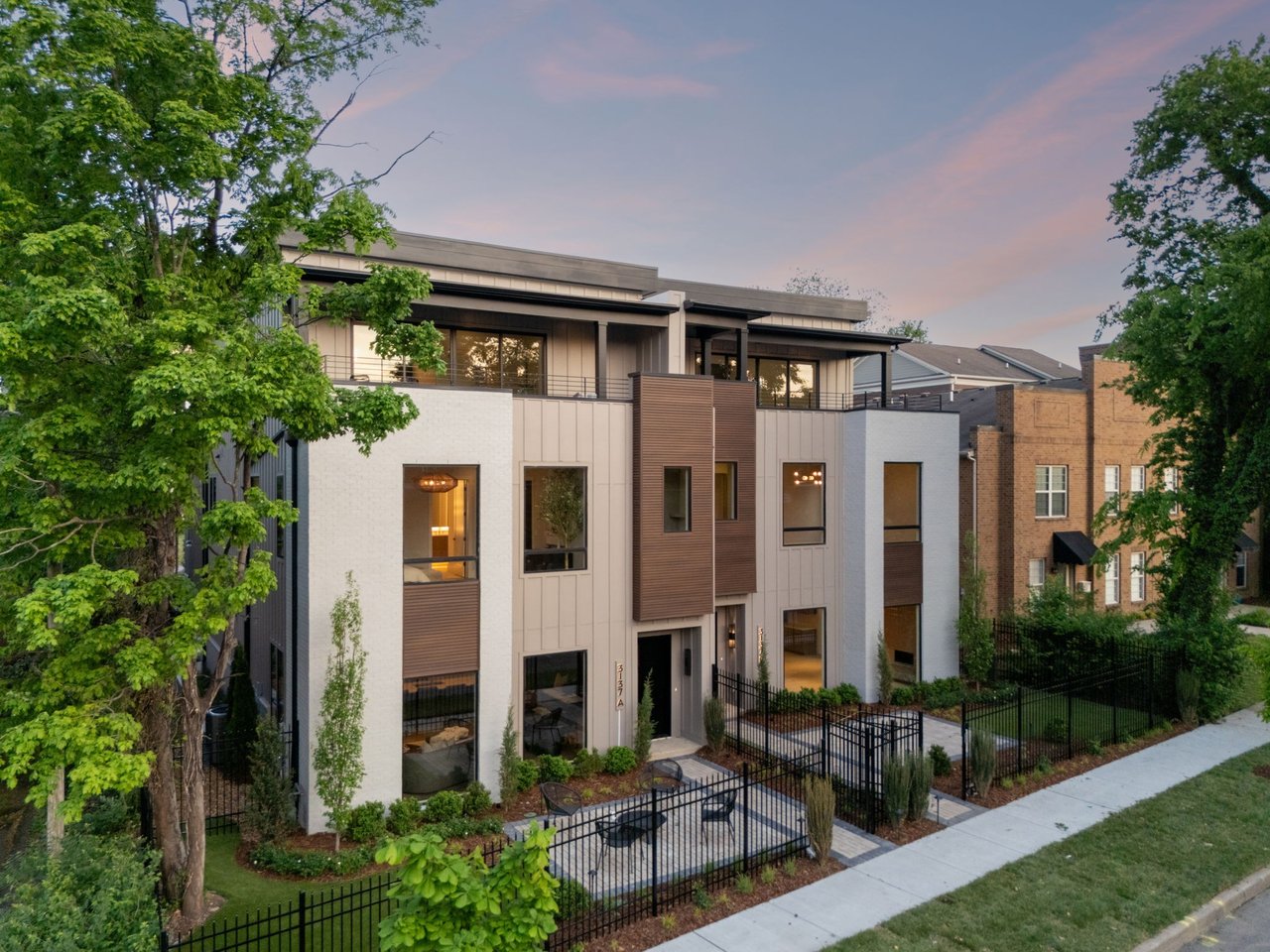
Two mirror-image luxury homes steps from Vanderbilt, Centennial Park, and West End's best dining

MPC Expertise
The licensed brokers, operations, and marketing team behind every transaction

Neighborhood
Where home values concentrate across Music City, from Green Hills to Berry Hill
The client deserves the full service and attention that only a team of experts can consistently provide. Working with us, you will have the personal attention traditionally associated with the client-agent relationship improved by the professionalism and consistency of a thoughtful business model. And yes, superior results will follow!
MORRELL PROPERTY COLLECTIVE
(615) 593-3103
[email protected]
ADDRESS
3990 Hillsboro Pike, #320
Nashville, TN 37215