Luxury Homes With Guest Houses: Are They Worth It?
Morrell Property Collective September 1, 2026
Real Estate Market
Morrell Property Collective September 1, 2026
Real Estate Market
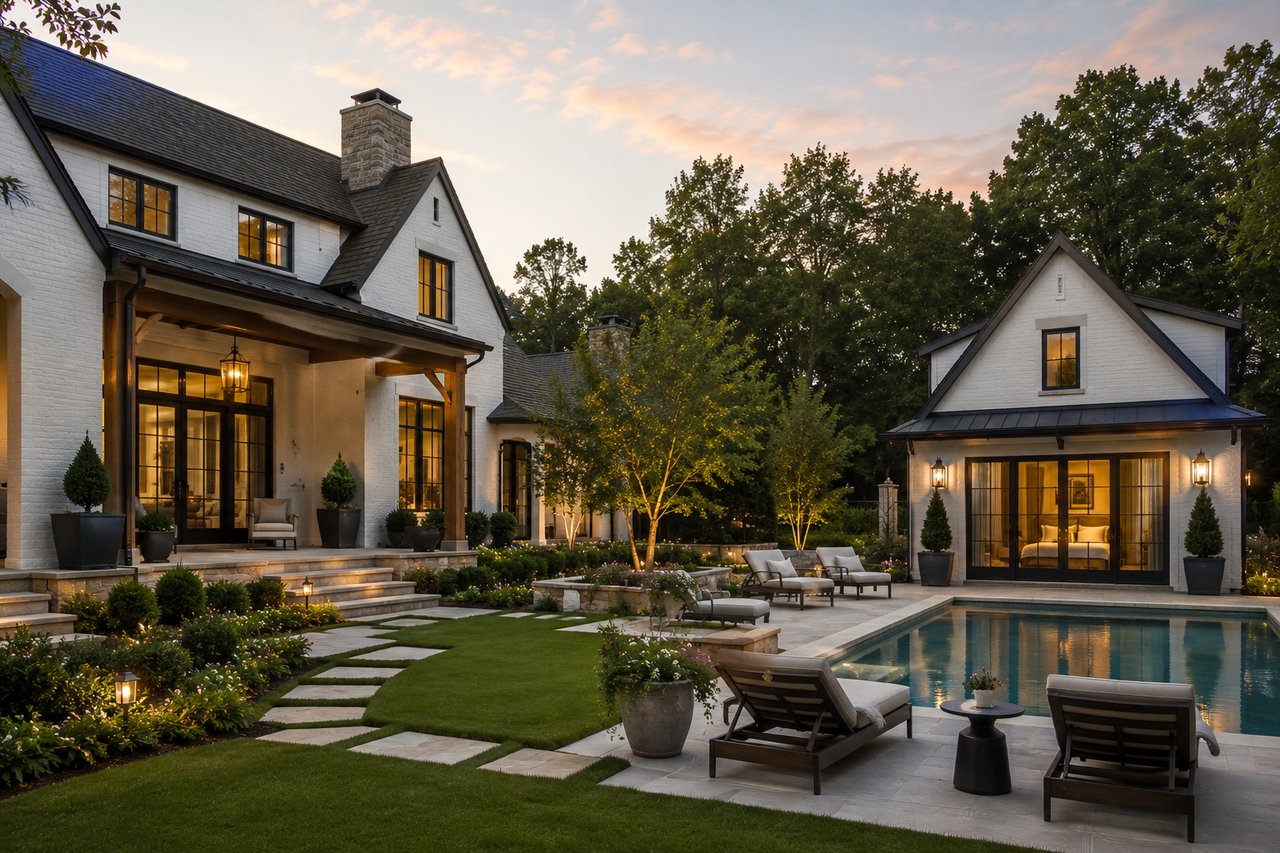
A guest house sells a feeling — visiting in-laws, a home office with its own front door, a rental unit tucked behind the pool. We've already covered that side of it. What we haven't covered is the math: what one of these costs to build, what it adds back when you sell, whether it can earn its keep as a rental, and what the zoning code will and won't let you do with it.
This post is the numbers-first companion to our full guide on Nashville's luxury homes with guest houses, which covers neighborhoods and lifestyle features in more depth. Here, we're answering one question: is it worth it?
Key takeaways:
New construction on a detached guest house generally runs $110 to $250 per square foot, per 2026 cost data from Angi. A 300-square-foot studio falls around $45,000–$95,000; a 550-square-foot one-bedroom, $80,000–$140,000; an 800-square-foot unit with a full kitchen, $115,000–$210,000. Homeowners spend an average of about $85,000 overall, with a full range of $62,000–$225,000. The biggest swing factors: contractor fees, plumbing, HVAC, foundation type, and permitting. A converted garage costs less than new construction.
A permitted guest house isn't a dollar-for-dollar addition to your sale price, but it isn't a break-even project either. Industry data puts the resale value increase at roughly 20%–40% of the home's value in strong markets, with homeowners typically recovering 50%–75% of construction cost at sale. It's a genuine value-add, especially in a market like Nashville's where buyers actively search for them — but the rest of the return comes from livability and, where zoning allows it, income.
This is where Nashville and Knoxville diverge, and it matters more than most buyers realize before they build.
Nashville's rules. As of a 2026 zoning update, Nashville permits Detached Accessory Dwelling Units (DADUs) by right in most of the Urban Services District, capped at 700–850 square feet depending on lot size, with one of the two dwellings required to be owner-occupied. The update also closed a door: a newly built or converted DADU cannot operate as an owner-occupied short-term rental. Long-term leasing is different — with an owner in either unit, a tenant in the other fits the rule, making that the more realistic income path today.
Knoxville's rules. Knoxville caps a detached ADU at 750 square feet and 18 feet, requires a 5,000-square-foot minimum lot, one parking space, and owner-occupancy of one unit. Unlike Nashville, Knoxville permits short-term rental of an ADU with city STR registration.
Where long-term rental is the path, expect a small unit to lease near the broader market rate: Nashville's citywide median rent sat at $1,368 a month in July 2026, with accessory units in desirable neighborhoods commanding more.
Standard homeowners insurance covers a detached guest house under "Other Structures" — Coverage B — which typically defaults to just 10% of your dwelling coverage limit. On a $300,000 policy, that's $30,000 of protection, which may not replace a genuine guest house if it's damaged or destroyed. If yours is worth more, ask your carrier to raise the limit to match actual rebuild cost.
One more detail that trips owners up: renting the guest house out for income often falls outside standard coverage, which typically excludes structures "used primarily for commercial purposes." Renting it — long-term or short-term — usually means notifying your insurer and adding a landlord or business-use endorsement, not relying on the base policy.
Morrell Property Collective's current listing at 2334 Golf Club Lane in Green Hills shows this on a real property. The 7,906-square-foot main house, listed at $5,499,900, includes a detached 750-square-foot guest house with a bedroom, loft, kitchenette, and great room — sized right at Knoxville's ADU cap and finished as a genuine second living space, not a bare-bones accessory unit. It's a useful reference point next to the cost-to-build numbers above.
For the right buyer, yes: a permitted guest house typically costs $62,000–$225,000 to build, recovers roughly half to three-quarters of that cost in added resale value, and can generate rental income where zoning allows it. It's a weaker bet as a pure rental investment in Nashville, since new units can't operate as owner-occupied short-term rentals.
Most detached guest houses cost $110–$250 per square foot, with a typical full project averaging around $85,000. Kitchens, bathrooms, foundation type, and site conditions are the biggest swing factors, and a converted existing structure costs less than new construction.
Can I rent out a guest house in Nashville? Long-term rental is generally workable as long as one dwelling stays owner-occupied. A newly built or converted DADU cannot operate as an owner-occupied short-term rental under Nashville's current rules.
Does a guest house increase home value? Yes, typically by 20%–40% in strong markets, though it rarely returns 100% of its construction cost through resale alone — the rest comes from usability and rental potential where zoning permits it.
Does homeowners insurance cover my guest house? Yes, under Other Structures coverage, but the default limit is only 10% of dwelling coverage — often too low. Ask your carrier to raise it to match actual rebuild cost, and flag any rental use separately.
What's the size limit on a guest house in Nashville or Knoxville? Nashville caps new DADUs at 700–850 square feet depending on lot size; Knoxville caps detached ADUs at 750 square feet. Both require the property to remain at least partly owner-occupied.
A guest house can be worth it, but "worth it" depends on which return you're counting on. As a livability upgrade and resale draw, the numbers hold up well. As a pure income play, it depends heavily on the city and what the zoning code actually allows.
If you're weighing a guest house purchase, an ADU addition, or want to see 2334 Golf Club Lane's guest house in person, Morrell Property Collective can walk you through the numbers. Call (615) 593-3103.
Real Estate Market
A cost-and-ROI breakdown for buyers and owners weighing a guest house in Nashville or Knoxville
MPC Expertise
The plain-English answer to a term you keep hearing — and how to actually get access
Buyers
A lifestyle gut-check before you start touring downtown Nashville high-rises
Buyers
Why Nashville's most discerning buyers are paying for privacy — and what to weigh before you do
Sellers
Why presentation carries more weight at the top of the market — and what current data actually shows
Buyers
The program is usually pitched to sellers — here's what it actually means if you're the one buying
Nashville
There's no single "best" Nashville neighborhood — just the one that matches what you're actually optimizing for

Nashville
Lakes, trails, clubs, and wine country — the real geography behind Nashville's executive lifestyle
Nashville
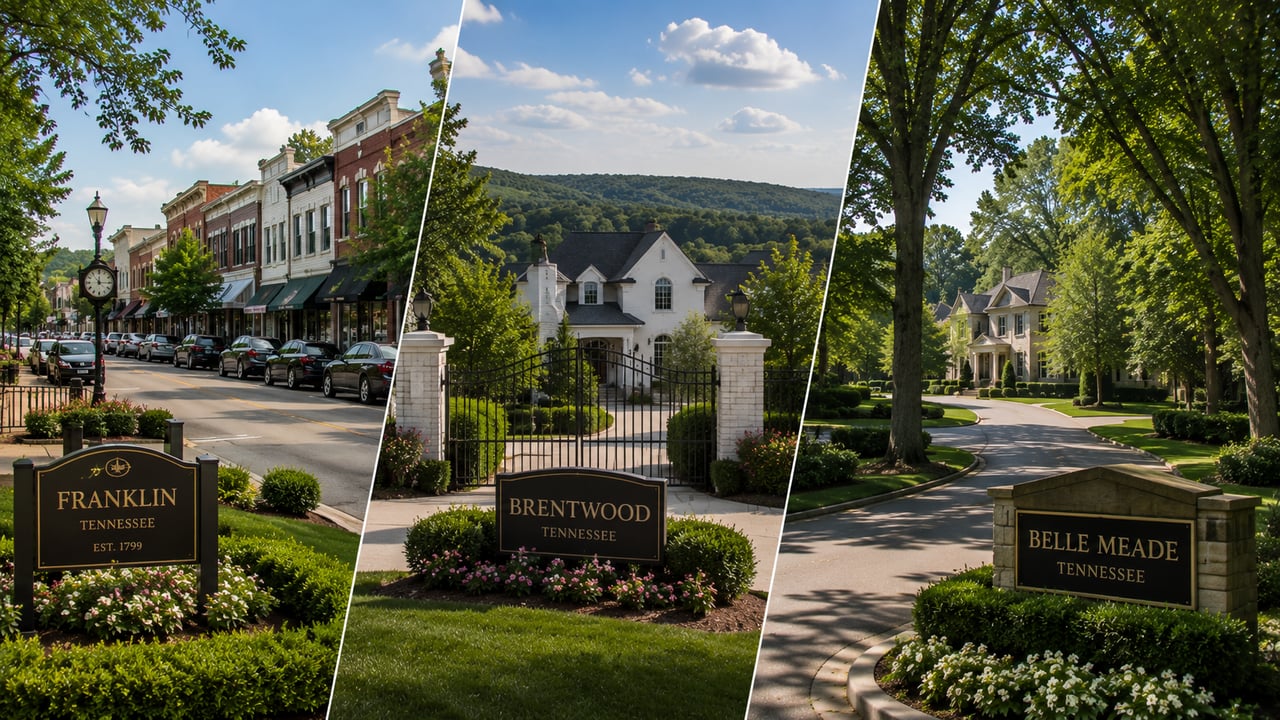
Three of Middle Tennessee's best-known luxury markets, compared on price, character, and commute
The client deserves the full service and attention that only a team of experts can consistently provide. Working with us, you will have the personal attention traditionally associated with the client-agent relationship improved by the professionalism and consistency of a thoughtful business model. And yes, superior results will follow!
MORRELL PROPERTY COLLECTIVE
(615) 593-3103
[email protected]
ADDRESS
3990 Hillsboro Pike, #320
Nashville, TN 37215